The Situation: Opportunity Assessment How do we design for low-income communities to improve their financial health?

The challenge
Client is a big box retailer that attracts low-income consumers. They want to introduce a retail credit card and credit education program for its customers. The three main objectives are:
#1 To understand the unique experience of low-income customers today.
#2 To investigate the best way to display complex and complicated credit information on a screen.
#3 To explore how to make personalized credit information digestible, educational, and hopeful.

Research Plan and Timeline
Two rounds of In-depth interviews; 10 participants for 30 minutes each
First round to understand their experiences with credit
Second round to receive their feedback on initial prototypes
Competitive analysis with other credit education programs
Literature review related to the experiences of low-income communities and psychology related to learning and change of behavior
Moderated usability test for final prototypes
Timeline: ~12 weeks
The Target Audience
Who should we talk to for this project?
Users who self-identified as needing government assistance (such as EBT food stamps) or currently struggled to pay bills
Ages: 25-60+
Any level of education
$0- 30,000
Self-identified as “Not knowledgeable” about credit

What did we learn?
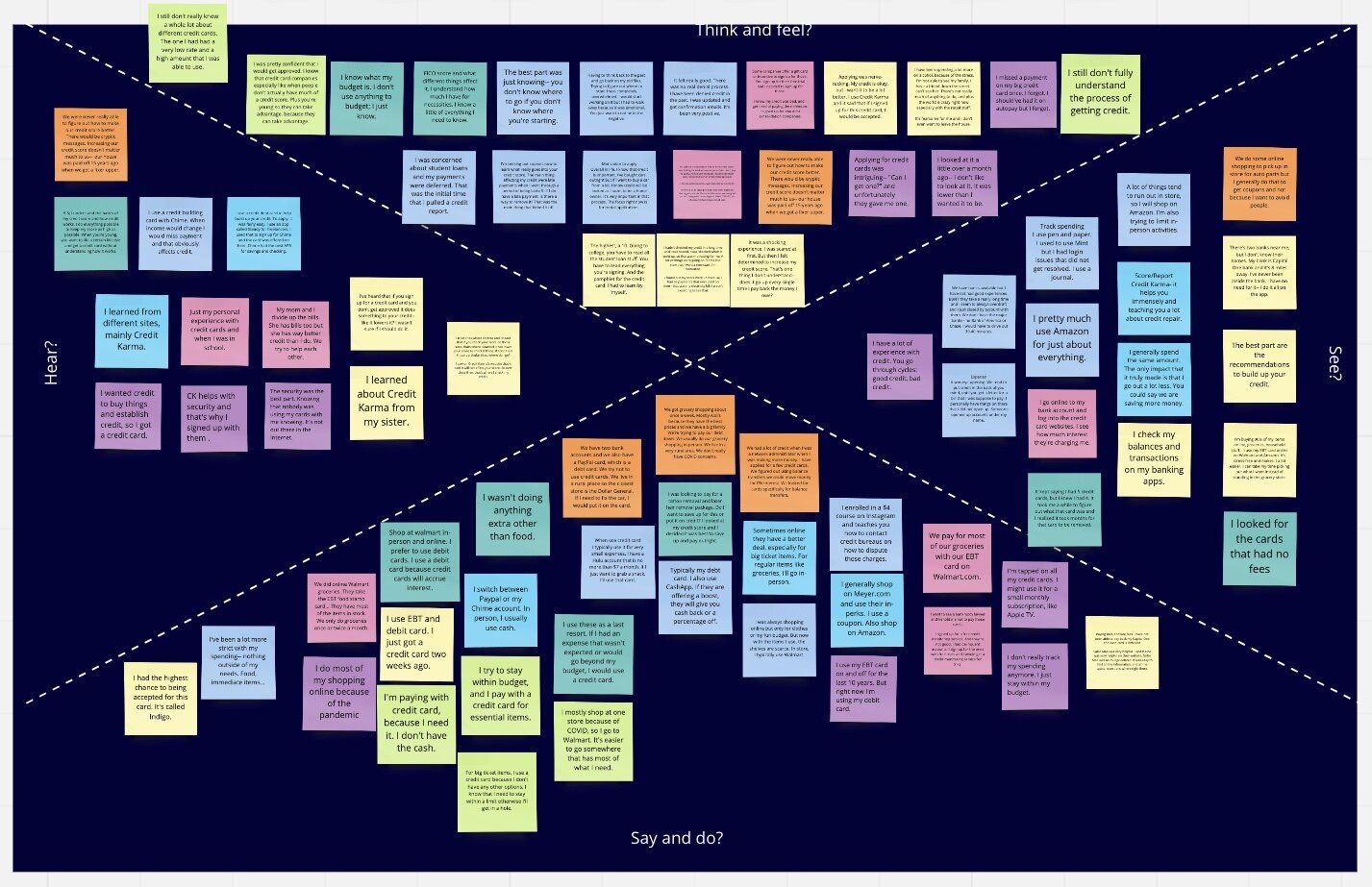
In-Depth Interviews:
Overall, consumers struggled to connect their full credit picture, including their past credit history, to where it stands today.
All of the participants I spoke to had a great desire to improve their situation, but felt it was an overwhelming process.
Why was it important to talk to this audience?
By understanding their unique experiences and how to meet their needs, it creates a pathway to creating a product that can be expanded to more users.
Literature Review:
Educating entire families, not just individuals, contributes to breaking the cycle of poverty
Shame and embarrassment can be a barrier to learning about financial education
Competitive Analysis:
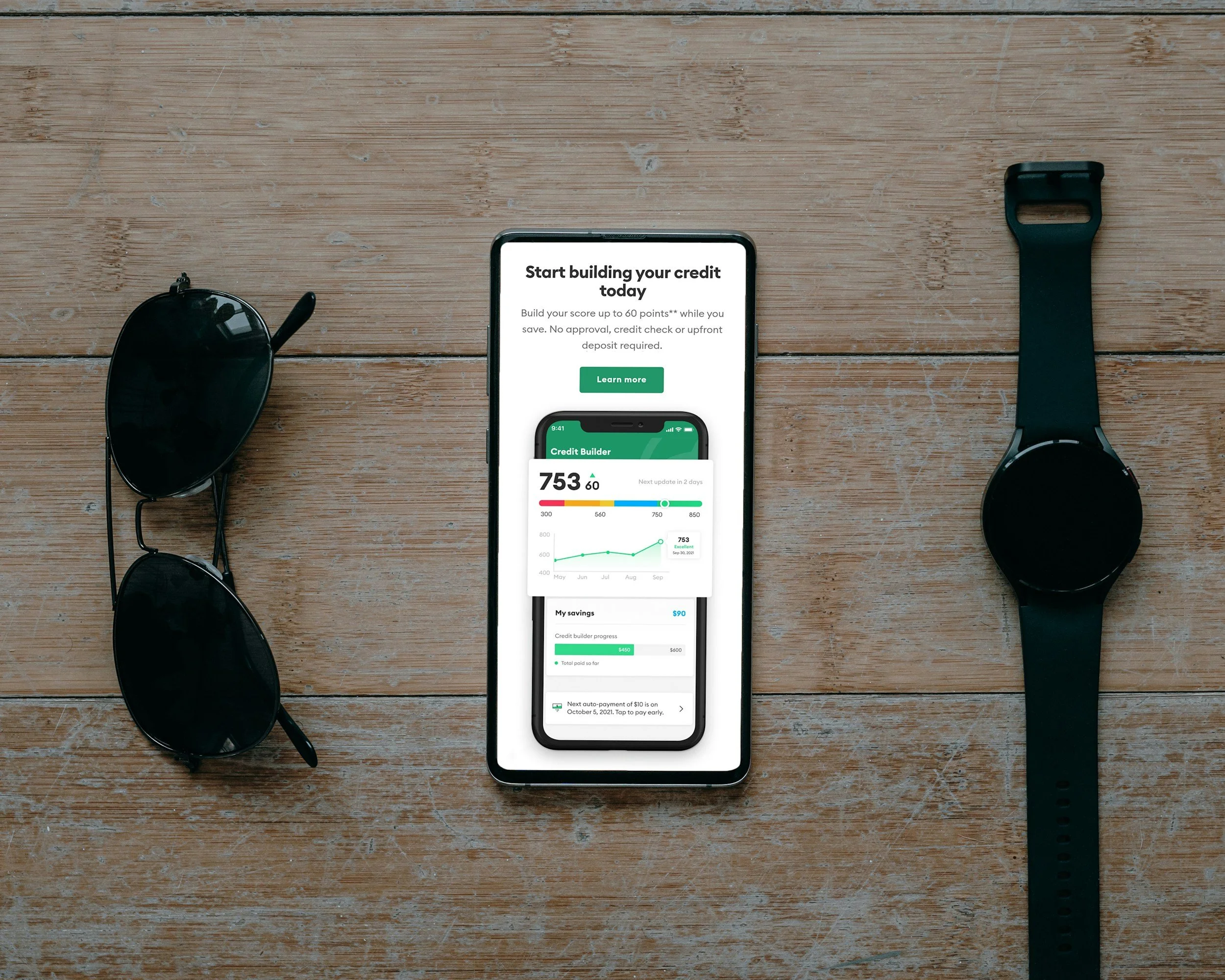
What did we learn from other credit programs?
Gamification is a popular tool for engagement
Short burst of information make it more engaging
Personalized information alongside education make it easier to understand
How did the research make an impact on the user?
MVP design choices made as a result of research:
Prioritize a CTAs to resolve crisis (ex: debt management or disputing a charge)
Provide actionable steps/tips/tricks next to their personal data
Keep the information simple, well-organized, and digestible “at a glance”
After the final prototype was created, it was tested again during an unmoderated usability test.
During the usability test, users said the display softened the learning curve.
It saved time and energy from having to Google credit lingo back and forth.
By removing the barriers and displaying the “need to know” information, the research showed that simplicity quickened their understanding of credit factors.

Results
Despite a fast timeline, we delivered the research-backed product to the client.
During the stakeholder call with executive leadership, they were touched by the level of research that was done to ensure this was prepared properly and reach the target audience.
They moved forward with the contract and more iterations of the product went underway.
What I would have done differently: Start a ODI (outcome driven innovation) survey to better understand the gap in future features sooner and wait to build a prototype with designers until after the first round of research was complete.